Getting Married in Portugal: The Complete Guide for UK Couples
Veilly Team
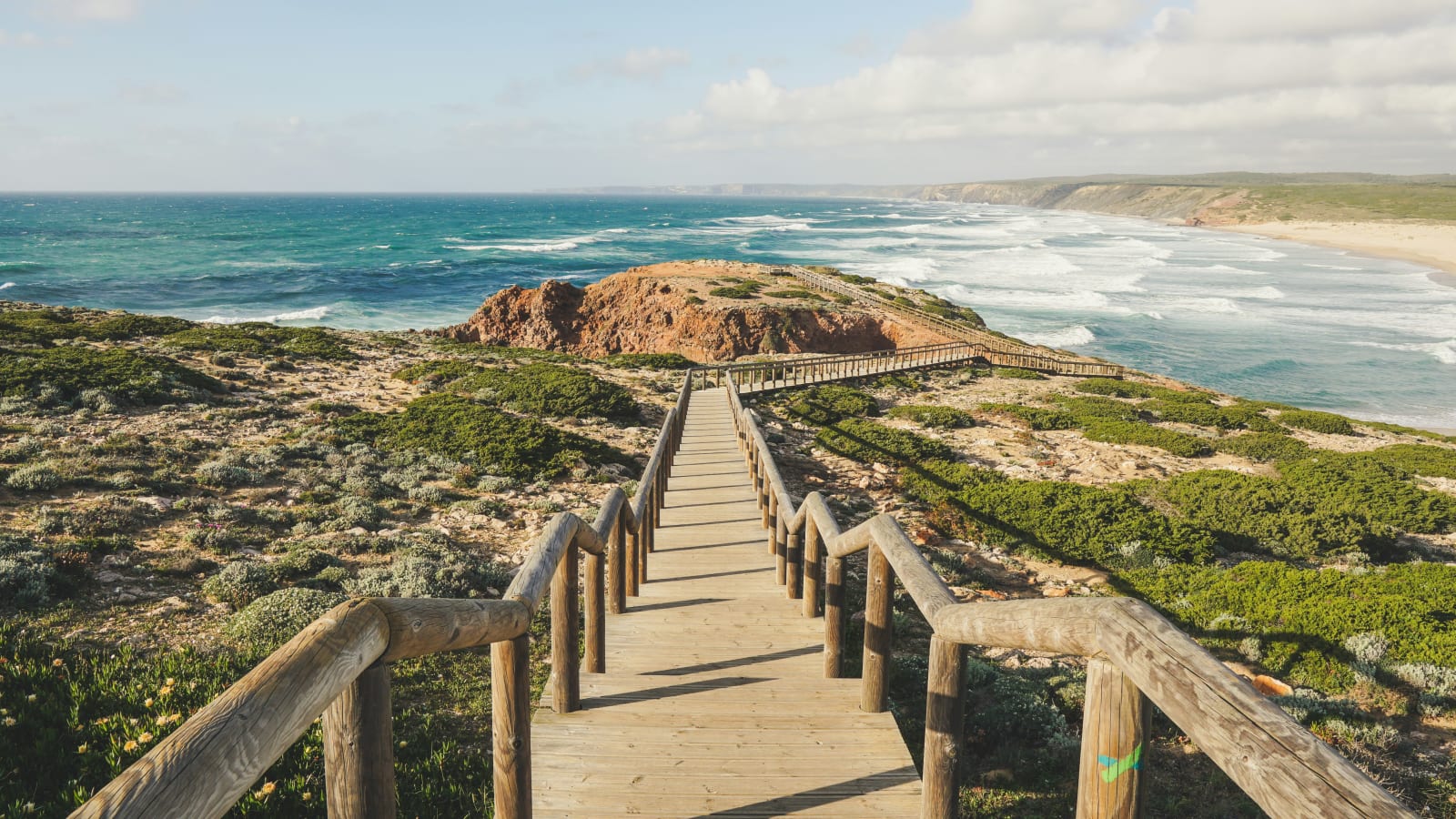
Getting married in Portugal is the shortest route to a legal marriage in mainland Europe: no residency requirement, a licence you can arrange in weeks — and a legal system that has treated every couple exactly the same since 2010. Add the clifftop beaches of the Algarve, the misty palaces of Sintra and the vineyards of the Douro at prices that still embarrass Italy, and you have the full picture. This guide covers the paperwork, the real costs, the weather and five very different Portugals.
Key takeaways
- Portugal has no residency requirement — you can arrive as tourists and hold a fully legal wedding. The paperwork (an apostilled CNI with certified translations) starts at least six weeks before the date, comfortably three months; it's the lightest procedure in mainland Europe.
- Same-sex marriage has been legal since 2010, including for couples from abroad — Portugal was the sixth country in Europe and remains one of the most LGBTQ+-friendly wedding destinations anywhere.
- A typical destination wedding costs €20,000 to €45,000. A quinta — the Portuguese estate combining ceremony, dinner and accommodation in one place — hires for €5,000 to €15,000; Sintra's palaces run €15,000 to €50,000. Catering is €150 to €300 per head.
- The best months are April to June and September to October, but the Algarve works nearly year-round and Madeira literally does. Mind the Atlantic: the ocean is cooler than the Mediterranean and the coast can be breezy.
- A Portuguese wedding cuts the cake around midnight — often with fireworks — and ends between 1 and 7 in the morning. UK guests deserve fair warning about that rhythm.
Why Portugal?
For years Portugal was "the cheaper alternative" to Italy and Spain — today it's a first-choice destination, for several reasons at once. The law: the simplest legalisation in mainland Europe, with no residency, no exceptions and no asterisks. The logistics: Faro at two hours fifty from London with the airport close to most venues, Lisbon at two forty, Porto at two twenty, all served by low-cost routes from a dozen-plus UK cities year-round. The aesthetics: from the barefoot chic of Comporta, through the azulejos and palaces of Sintra, to the terraced vineyards of the Douro — a range of scenery only Italy can rival. And prices that, for the same standard, can still come in a third lower. Portugal isn't for couples who need guaranteed beach heat in midsummer — the Atlantic has a character of its own — but beyond that, it's hard to name what's missing.
How to get married in Portugal as a UK couple
The Portuguese procedure is simple, predictable and — most importantly — open to every UK couple with no preconditions. Here's how it works.
What documents do you need?
Each of you needs: a valid passport, a full birth certificate and a certificate of no impediment (CNI) — the official confirmation you're free to marry — from your local register office, issued after the notice period. Every document must be apostilled (the international legalisation stamp) and translated into Portuguese by a certified translator, and the CNI and birth certificates must be under six months old when submitted — so, as in Italy, the documents can't be prepared far in advance. If divorced, add the decree absolute; if widowed, the death certificate (also apostilled and translated).
How long does it take?
You submit the full set to the Conservatória do Registo Civil (civil registry office) of the municipality where you'll marry, at least one month before the ceremony. The licence itself takes a minimum of four weeks to process, so start no later than six weeks before the date — and with buffer for translations and corrections, three months is the comfortable answer. Once issued, the licence is valid for six months. In practice: you book the venue a year out, start the paperwork a quarter before the wedding, and everything clicks into place without stress.
Civil, Catholic or symbolic?
A civil wedding can take place outside the registry office — at a quinta, in a garden, on a clifftop — with ceremonies arranged in cooperation with the registrar. A Catholic wedding is legally binding (formalities run through your UK parish plus the civil registry). A symbolic ceremony remains an option for couples who prefer to handle the legalities in England — but in Portugal, as in Cyprus and Greece, there's simply no need.
Same-sex couples: full equality since 2010
Portugal legalised same-sex marriage in 2010, the sixth country in Europe — and the law covers foreign couples with no residency requirement, even those from countries that don't recognise such marriages. The procedure is identical to that for opposite-sex couples, and the Portuguese wedding industry is among the most welcoming in Europe. Alongside Greece, it's the best choice for a fully legal same-sex wedding in the sun.
How much does a wedding in Portugal cost?
A typical destination wedding comes in at €20,000 to €45,000, with the full range running from €15,000 for intimate celebrations to €65,000-plus in the luxury tier. The heart of the Portuguese model is the quinta — an estate (often a wine estate) combining the ceremony, the reception and accommodation for part of the guest list in one place: hire runs €5,000 to €15,000, which for a destination weekend format is hard to beat. Sintra's palace venues run €15,000 to €50,000; Algarve beach resorts €10,000 to €20,000 for exclusive use. Budget catering with drinks at €150 to €300 per head. A worked example for 100 guests in the Algarve: around €50,000 all-in (venue with accommodation €20,000, catering €15,000, décor and music €10,000, photo and film €5,000).
Against Italy or the Balearics, Portugal offers two kinds of advantage. The first is obvious: the same elements cost less, and the quality of the food and wine — Portugal is one of Europe's best value wine countries — works directly in favour of the guest experience. The second is structural: the quinta model with on-site accommodation cuts transfers, simplifies logistics and turns the wedding into a weekend at a single address — exactly the format UK couples love most.
When to go: the weather month by month
Portugal's season is longer than the Mediterranean's and more regionally varied. April to June is the best window on the mainland: 20 to 28°C, greenery, bougainvillea in bloom and pre-peak prices. July and August in the Algarve are hot (30°C-plus), but the Atlantic breeze tempers the heat more effectively than in the Balearics — though the ocean rarely passes 20 to 22°C even in August, worth flagging to guests dreaming of a swim. Sintra has a microclimate of its own: Atlantic mist can wrap the palaces even on a July morning — photogenic, but it demands a ceremony plan B. The Douro in midsummer can be the hottest place in the country (35°C-plus), while September with the grape harvest is pure magic there. September and October are excellent everywhere: warm, soft light, thinner crowds. Madeira plays in its own league — subtropical 20 to 25°C every month of the year makes it, alongside the Canaries, Europe's only real option for a full outdoor wedding in winter.
Which region should you choose?
Portugal looks modest on the map, but as a wedding destination it's five different worlds. Here's how UK couples choose.
The Algarve
The classic and still the most popular choice: clifftop coastline, golden beaches and the best wedding infrastructure in the country — from beach resorts like Pine Cliffs with its clifftop chapel to quintas inland. Faro airport sits close to most venues, which older guests appreciate. Budgets from €20,000 to €50,000-plus. A near-year-round season. For couples who want sun, beach and a proven script without risk.
Lisbon and Sintra
The most editorial pairing: Lisbon's palácios and rooftops combined with romantic, misty Sintra — Palácio de Seteais overlooking the Moorish Castle, or Quinta da Bela Vista, once home to Arthur Conan Doyle. A two-forty flight, and an enormous hotel and restaurant base for guests. Palace prices: €15,000 to €50,000 for the venue alone. A great city and a fairytale backdrop in one weekend — a pairing you won't repeat anywhere else.
Comporta
Portugal's Hamptons, an hour south of Lisbon: wild dunes, rice fields, barns turned venues and barefoot luxury of the kind fashion magazines fell for — with Sublime Comporta leading the way. Prices climb season by season, but still sit below the comparable look on Ibiza. If the wedding is meant to read like an editorial rather than a postcard — this is the place.
The Douro Valley
The world's oldest wine region: terraced vineyards above the river's bends, quintas like Quinta da Pacheca and resorts like Six Senses Douro Valley. A ceremony among the vines, dinner in a cellar of port barrels, September with the harvest in the background. The journey needs communicating: fly to Porto (two twenty) plus an hour and a half's transfer. The choice when wine and landscape outrank the beach.
Madeira
The year-round wild card: a subtropical island of cliffs and laurel forests at 20 to 25°C in every month. A longer flight (around three fifty-five) but direct from the UK, with gentler prices than the mainland in season. The same simple legal procedure as the rest of Portugal. The natural pick for a wedding between November and March — in scenery nobody else will have.
How to decide? Beach and a safe bet — the Algarve. Palaces and a city — Lisbon with Sintra. Editorial and dunes — Comporta. Wine and September — the Douro. A winter wedding — Madeira.
Portuguese customs that surprise UK guests
A Portuguese wedding is above all about food — in quantities your guests should be warned about. The reception, traditionally called the copo de água ("glass of water" — the most misleading name in the industry), opens with stations of appetisers and seafood, moves into a dinner with separate fish and meat courses, and closes with desserts nobody has room for. The cake is cut around midnight, often with fireworks, and the party runs until somewhere between 1 and 7am — a British guest used to a midnight last dance should know this before booking a morning flight.
A few traditions worth knowing or adopting: the madrinha and padrinho — witness-guardians whose role sits closer to godparents than to a best man; the wedding convoy driving from ceremony to reception with horns blaring and white tulle on the mirrors; the rice shower on the way out of the ceremony. And if either of you has an unmarried older sibling, warn them with a smile: tradition says they dance barefoot at the wedding. Working with Portuguese vendors, you'll appreciate the calm and flexibility — but as everywhere in the south, confirm agreements in writing and leave buffer for replies.
Guest logistics: the quinta solves half of it
Take a real scenario: 90 guests, a quinta near Óbidos for the weekend — 30 people sleeping on site, 40 in hotels in the town fifteen minutes away, 20 in Lisbon an hour out. A Friday welcome dinner at the grill, a Saturday ceremony at 5pm, cake at midnight, a Sunday brunch by the pool. Every guest needs to know: am I in the quinta or a hotel, when does the last night transfer leave for Lisbon, and that after the midnight cake the party is only warming up. The quinta model solves half the logistics — but the other half, the communication, it leaves to you.
That's the half Veilly closes: one private wedding website where every guest sees where they're sleeping, their transfer and the full weekend schedule — through a link from the invitation, no app, no registration. You don't answer "wait, where am I actually sleeping?" for the fortieth time, and the wedding looks as considered from the first click as the quinta you chose.
Your planning timeline, step by step
Twelve to fifteen months out: region and venue — the best quintas and September Saturdays in the Douro go first; Portugal forgives shorter runways than Italy, but not at peak. Nine to twelve months out: save-the-dates with the airports (Faro, Lisbon or Porto — the first thing guests need to know). Six months out: menu with a tasting, photographer, music. Three months out: start the paperwork — CNI, apostilles, certified translations (remember: documents under six months old at submission). At least one month out: the full set at the Conservatória do Registo Civil. Two months out: RSVP deadline, guests assigned to the quinta and hotels, night transfers. The final week: no bureaucracy — the licence is waiting, and Portugal asks nothing of you on site except to show up.
Summary
Portugal has collected the best of every destination: legalisation without residency or asterisks like Cyprus, marriage equality like Greece, a range of scenery like Italy — and added its own quinta model, where the whole wedding lives at a single address. Make the decisions in order: region (the Algarve for the safe bet, Sintra for the fairytale, Comporta for the editorial, the Douro for the wine, Madeira for winter), date (May–June and September–October, with the harvest as the wild card), venue — and leave the paperwork calmly for the final quarter. What remains is 90 guests spread between a quinta, hotels and Lisbon, and a schedule everyone needs to know in advance. That part fits in a single link from the invitation — and the Atlantic will handle the rest.
Frequently asked questions
Here are the questions British couples ask most often when planning a wedding in Portugal.
Can UK couples legally get married in Portugal?
Yes, with no residency conditions — you can arrive as tourists. You need a CNI from your register office, apostilles and certified Portuguese translations; the full set goes to the registry office at least one month before the wedding, and the process should start no later than six weeks (comfortably three months) before the date.
Can same-sex couples get married in Portugal?
Yes. Same-sex marriage has been legal since 2010, including for foreign couples with no residency requirement — even from countries that don't recognise such marriages. The procedure is identical for all couples.
How much does a wedding in Portugal cost for 80 to 100 guests?
Typically €20,000 to €45,000; a worked example for 100 guests in the Algarve comes to around €50,000 all-in. A quinta with accommodation hires for €5,000 to €15,000, Sintra palaces for €15,000 to €50,000, and catering runs €150 to €300 per head.
What is a quinta, and why does everyone talk about it?
A quinta is a Portuguese estate — often a wine estate — that combines the ceremony, the reception and accommodation for part of the guest list in one place. For a destination wedding it's the ideal format: fewer transfers, simpler logistics and a weekend at a single address.
What is the best month to get married in Portugal?
May, June, September and October. July and August in the Algarve are hot but tempered by the breeze; the Douro can be scorching in midsummer, while its September harvest is the region's most beautiful moment. Madeira works year-round (20 to 25°C even in winter).
What time does a Portuguese wedding end?
Late: the cake is cut around midnight (often with fireworks), and the party runs until 1 to 7am depending on the venue. Warn your UK guests not to book morning flights home.
Will our Portuguese wedding be recognised in the UK?
Yes — a civil or Catholic wedding carried out under Portuguese law is recognised in the UK with no further steps. Keep the apostilled marriage certificate for UK administrative purposes.