Getting Married in Spain: The Complete Guide for UK Couples
Veilly Team
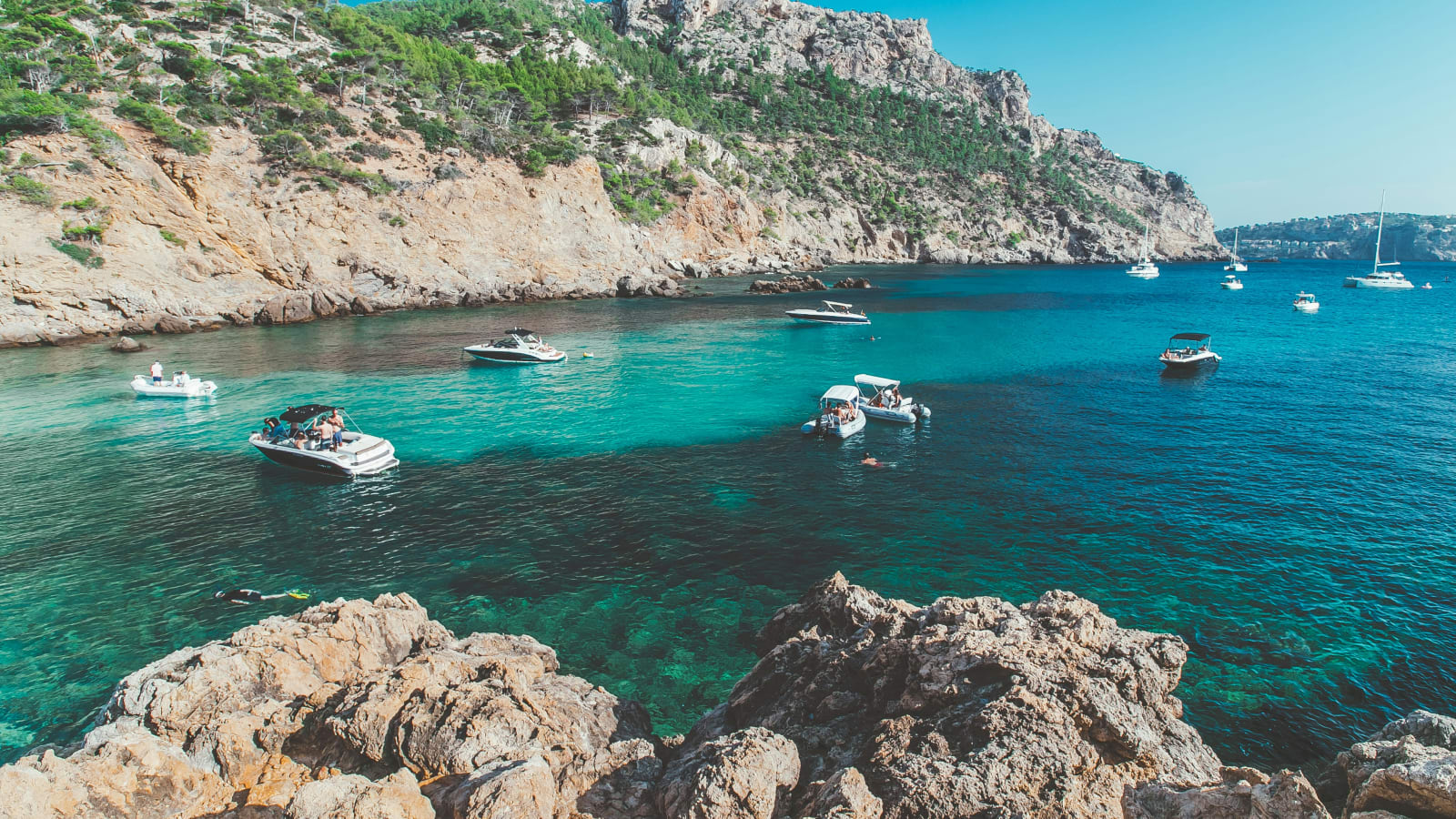
Getting married in Spain comes with one catch that UK couples usually discover too late: a civil wedding requires one of you to live in Spain. Before you cross off the white fincas of Ibiza and the palaces of Andalusia, though, meet the three legal workarounds — including one few people know about: a Catholic church wedding has no residency requirement and is fully binding. This guide walks you through the paperwork, the real costs, the weather and five very different Spains.
Key takeaways
- A civil wedding in Spain requires one partner to be resident there, which rules it out for couples living in the UK. You have three ways forward: a Catholic wedding on site (no residency requirement, legally binding), a civil marriage in England plus a symbolic ceremony (the standard), or a legal wedding in Gibraltar right next to the Costa del Sol.
- A typical destination wedding for 50 to 80 guests costs €15,000 to €35,000, a premium celebration for 70 to 90 guests realistically €35,000 to €60,000, and luxury productions on Ibiza and Mallorca exceed €60,000. Catering runs €120 to €220 per head, and moving the wedding to midweek cuts costs by 20 to 40 per cent.
- The best months are May, June and September. In July and August the south can pass 38°C — the ceremony shifts to 7 or 8pm and dinner past midnight.
- A Spanish wedding lives at night: cocktails at 8pm, dinner at 10pm, dancing from 1am until 5 or 6 in the morning. British guests need honest preparation for that timetable.
- Spain is five completely different destinations in one: Ibiza (the premium party), Mallorca (clifftop elegance), the Costa del Sol (glamour with Gibraltar around the corner), Seville and inland Andalusia (palaces and authenticity) and the Canary Islands (a season that never ends).
Why Spain?
Spain tempts with things that can't be imitated: the light photographers call Andalusian gold, white fincas among olive groves, and a culture of celebration where a four-hundred-guest wedding is normal rather than extravagant. The logistics play on your side: Palma and Ibiza are just over two hours from London, Malaga and Seville under three, with dozens of low-cost routes from across the UK all season. The food — from paella to jamón to cava — does half the work of the guest experience on its own. There's one catch, and it lives in the paperwork: Spain is the only one of the big five destinations that requires residency for a civil wedding. Which is why this guide starts unusually — with the law, not the views.
How to get married in Spain as a UK couple
Let's say it plainly, because too many couples discover it after booking the venue: a classic civil wedding in Spain is practically out of reach for couples living in the UK. But you have three real paths — and each leads to a beautiful wedding.
Why is a civil wedding off the table?
Spanish law requires at least one of you to live in Spain or hold Spanish nationality; sources point to as much as two years of continuous residency before a civil marriage. On top of that comes exchanging your UK CNI (certificate of no impediment — the document confirming you're free to marry) for the local equivalent, and proceedings before the Spanish civil registry. For a couple based in London or Manchester, it's a barrier not worth fighting — especially when better routes exist.
The exception few people know: a Catholic wedding
A Catholic church wedding has no residency requirement and is fully legally binding in Spain. The conditions: at least one of you must be a baptised Catholic, neither of you can have previously married in the Catholic church, and the parish formalities run through your UK parish, started several months ahead. For couples with a Catholic background — and among Britons with Irish or Polish roots that's a sizeable group — this means a fully real wedding in an Andalusian cathedral or a Mallorcan chapel, with no "pretend" ceremony anywhere.
The standard: civil marriage in the UK + symbolic ceremony
Most British couples do what they'd do in Italy or France: the legalities at their local register office a few weeks before travelling, then a full-scale celebrant-led ceremony in Spain — on the Son Marroig cliff, in a finca garden, on a beach at sunset. Guests never see the difference, and you gain complete freedom of setting and script.
The third way: Gibraltar
At the end of the Costa del Sol lies a British Overseas Territory where marriages are conducted under English law — no residency requirement, a short stay, and a marriage certificate recognised in the UK directly. More and more couples marry legally in Gibraltar on Friday and celebrate in Marbella on Saturday. If your wedding is planned for the Costa del Sol, it's the most elegant way to close the legal question.
Same-sex couples
Spain legalised same-sex marriage back in 2005, the third country in the world, and remains one of Europe's most LGBTQ+-friendly places. The residency requirement applies to everyone equally, though — in practice, same-sex couples from the UK choose a legal marriage in England with a symbolic ceremony on site, or Gibraltar.
How much does a wedding in Spain cost?
Spain covers a wide range: a typical destination wedding for 50 to 80 guests comes in at €15,000 to €35,000, a premium production for 70 to 90 guests at €35,000 to €60,000, and luxury weddings on Ibiza and Mallorca beyond €60,000. For context, the average Spanish couple spends €25,183 with around 123 guests — big guest lists are the cultural norm here, so the infrastructure for 100-plus people is excellent. Inside the budget: finca or villa hire from €4,000 to €8,500 (premium Marbella estates €25,000-plus), catering at €120 to €220 per head with an open bar, plus flowers, photography and music.
Two savings levers work harder here than elsewhere. The first is the day of the week: a midweek wedding costs 20 to 40 per cent less than a Saturday — and since your guests are flying out for several days anyway, a Thursday ceremony is pure arithmetic. The second is the region: the same quality on Ibiza and in inland Andalusia sits across a price chasm — a rustic cortijo near Seville hires from €8,000, while a comparable standard on Ibiza starts far higher. Worth knowing too: July and August are peak pricing on the coasts with the hardest weather — May, June and September give you better conditions for less money.
When to go: the weather month by month
Spain's wedding season stretches from April to October, but the country is as climatically varied as any in Europe. May and June are the gold standard: 24 to 29°C, long evenings, the landscape still green. July and August demand strategy: in the south (Seville, inland Andalusia) temperatures pass 38°C, so the ceremony moves to 7 or 8pm, dinner past midnight, and older guests and children need shade and air conditioning; the coasts and islands are softened by the breeze, but it's still peak heat and peak pricing. September pairs the warmest sea of the year with soft light and noticeably lighter crowds. October works in the south and on the islands, though evenings turn cool. The Canary Islands are a league of their own: 20 to 27°C all twelve months — the only place in Europe where an outdoor ceremony in February is entirely realistic. Mainland winter is for indoor weddings; Andalusia can be sunny, but without guarantees.
Which region should you choose?
Spain is effectively five different wedding destinations, each with its own character, budget and crowd. Here's how UK couples choose.
Ibiza
The White Isle is Spain's answer to Mykonos: clifftop beach clubs like Amante above Cala Sol d'en Serra, elegant fincas inland, and a party energy that draws younger guest lists for the whole weekend. Flight from London: just over two hours, with plenty of routes in season. Budget for 50 to 80 guests: $30,000 to $55,000, with luxury well above. Sunset ceremonies facing Es Vedrà are a local institution. For couples who want a wedding that flows seamlessly into an after-party until sunrise.
Mallorca
The most editorial of the Spanish islands: clifftop Son Marroig with its Carrara marble pavilion above Sa Foradada, the fortress of La Fortaleza on a private peninsula in Pollença bay (one of the most exclusive venues in the country) and dozens of stone estates in the Tramuntana mountains. Flight around two hours twenty, into a large year-round airport. On price it plays in the premium league — closer to Ibiza than Andalusia — but with a more grown-up, quieter aesthetic. Mediterranean elegance without the club edge.
The Costa del Sol and Marbella
Glamour, Spanish edition: Marbella Club and Puente Romano right on the sea, fincas in the hills behind the coast, and the best hotel infrastructure in the country — guests at every budget will find a bed within twenty minutes. Flights to Malaga take around two hours fifty-five from a dozen-plus UK airports. And one advantage nobody else has: Gibraltar an hour from Marbella, meaning a legal wedding under English law the day before the celebration. Sunshine, polish and the paperwork closed, all in one package.
Seville and inland Andalusia
The most Spanish Spain: palaces lined with azulejos, courtyards of orange trees, white cortijos among olive groves, and flamenco that isn't a tourist attraction but the local language of emotion. The gentlest prices in this lineup: rustic venues from €8,000. Flights to Seville around two hours fifty. One caveat: midsummer here is merciless (38°C-plus), so aim for May, June, September or October. The choice for those who'd rather have the real Spain than the postcard.
The Canary Islands
The wild card: Tenerife (with venues like the oceanfront Gran Hotel Bahía del Duque), Lanzarote and Gran Canaria offer 20 to 27°C twelve months a year. The flight is longer (around four hours thirty), but direct routes run year-round from across the UK and prices are gentler than the Balearics. The only option in Europe for an outdoor wedding in November or February with a clear conscience — ideal if you're planning off season, or dodging peak pricing.
How to decide? A party until dawn — Ibiza. Editorial elegance — Mallorca. Glamour plus a legal wedding in Gibraltar — the Costa del Sol. Authenticity and value — Seville and the interior. An off-season wedding — the Canaries.
Spanish customs that surprise UK guests
The most important thing to communicate to your British guests is the timetable. A Spanish wedding lives at night: ceremony at 6 or 7pm, cocktails at 8, dinner starting at 10 and running past midnight, dancing from 1am until 5 or 6 in the morning. For a UK guest used to a 4pm wedding breakfast and a midnight last dance, it's culture shock — tell them to eat a late lunch, nap in the afternoon and not book a morning flight home. In the middle of the night comes la hora loca — the "crazy hour" of masks, confetti and props that storms the dancefloor around 2am.
Among the traditions worth adopting: las arras, thirteen gold coins exchanged between the couple during the ceremony as a symbol of mutual trust and shared life — a beautiful ritual in its symbolic version too. Spanish weddings are also naturally big and familial: guest lists of several hundred are the norm, so your 90 people won't intimidate any venue. When working with local vendors, expect a southern approach to time and communication — things happen, but at their own rhythm; confirm agreements in writing and leave buffer for replies.
Guest logistics: a nighttime wedding needs a plan
Let's make it concrete: 85 guests on Mallorca, the main hotel in Port de Sóller, a second group in Palma forty minutes away, the ceremony at Son Marroig at 6.30pm, dinner at 10, the party ending at 5am. Every guest needs to know not just where they're sleeping and who's collecting them, but — and nobody guesses this on their own — that dinner is at 10pm, that the night transfers run at 2 and 5am, and that the hotel breakfast is safely skippable. With the nocturnal timetable of a Spanish wedding, guest communication stops being a courtesy and becomes a condition of the party working at all.
This is precisely why Veilly exists: one private wedding website where every guest sees their hotel, their transfer (including the 2am one) and the full schedule — with the times that, at a Spanish wedding, really do need to be seen in black and white. A link from the invitation, no app, no registration — and zero messages asking "when is the food actually happening?".
Your planning timeline, step by step
Twelve to eighteen months out: region and venue — the top Balearic fincas and Marbella estates go first for peak-season Saturdays; decide your legal route at the same time (symbolic, Catholic or Gibraltar), because the next steps depend on it. Nine to twelve months out: save-the-dates with a clear note about the late-night schedule and the airports; for a Catholic wedding, start the parish formalities in the UK. Six months out: catering with a tasting, photographer, music (plus la hora loca if you're going local). Two to three months out: the civil marriage at your register office (symbolic route) or the Gibraltar booking; RSVP deadline, guests assigned to hotels and night transfers. The final month: vendor confirmations — in writing — and the final-details message to guests, with times that leave no room for guesswork.
Summary
Spain asks one more decision of you than other destinations — a legal one — but made at the start, it stops being a problem: a Catholic wedding with no residency requirement, a symbolic ceremony after the formalities in England, or Gibraltar the day before. In exchange you get a country that, for the same money, can be party-Ibiza, editorial-Mallorca, glamour-Marbella, authentic-Seville or year-round Tenerife — with a culture of celebration next to which a British wedding looks like a dress rehearsal. All that remains is preparing your guests for a night that ends at dawn — and giving them one place with every time, transfer and answer. Andalusia will take care of the rest.
Frequently asked questions
Here are the questions British couples ask most often when planning a wedding in Spain.
Can UK couples legally get married in Spain?
A civil wedding requires one of you to be resident in Spain, so for UK-based couples it's practically out of reach. The legal options: a Catholic wedding on site (no residency requirement, fully binding), a civil marriage in England plus a symbolic ceremony in Spain, or a wedding in Gibraltar under English law.
Is a church wedding in Spain legally binding?
Yes. A Catholic wedding has no residency requirement and carries full civil effect. The conditions: at least one of you baptised Catholic, no previous church marriage for either of you, and parish formalities started in the UK several months ahead.
How much does a wedding in Spain cost for 80 guests?
Typically €15,000 to €35,000, at a premium standard €35,000 to €60,000, and in the luxury tier on Ibiza or Mallorca above €60,000. Catering runs €120 to €220 per head. A midweek wedding costs 20 to 40 per cent less than a Saturday.
What is the best month to get married in Spain?
May, June and September. July and August pass 38°C in the south — the ceremony moves to the evening. The Canary Islands work year-round (20 to 27°C even in winter).
What time does a Spanish wedding start and finish?
Later than your guests think: ceremony at 6 or 7pm, dinner from 10pm past midnight, dancing from 1am until 5 or 6 in the morning, often with la hora loca around 2am. Warn your UK guests to pace their day — and not to book morning flights home.
Which region of Spain is best for a wedding?
Ibiza for the premium party, Mallorca for clifftop elegance (Son Marroig, La Fortaleza), the Costa del Sol for glamour with Gibraltar at hand, Seville and inland Andalusia for authenticity at the best prices, and the Canary Islands for an off-season wedding.
Will our Gibraltar wedding be recognised in the UK?
Yes — Gibraltar is a British Overseas Territory, marriages there are conducted under English law and are recognised in the UK with no further steps. That's why it's the popular legal close for Costa del Sol weddings.